
Last updated November 23, 2026
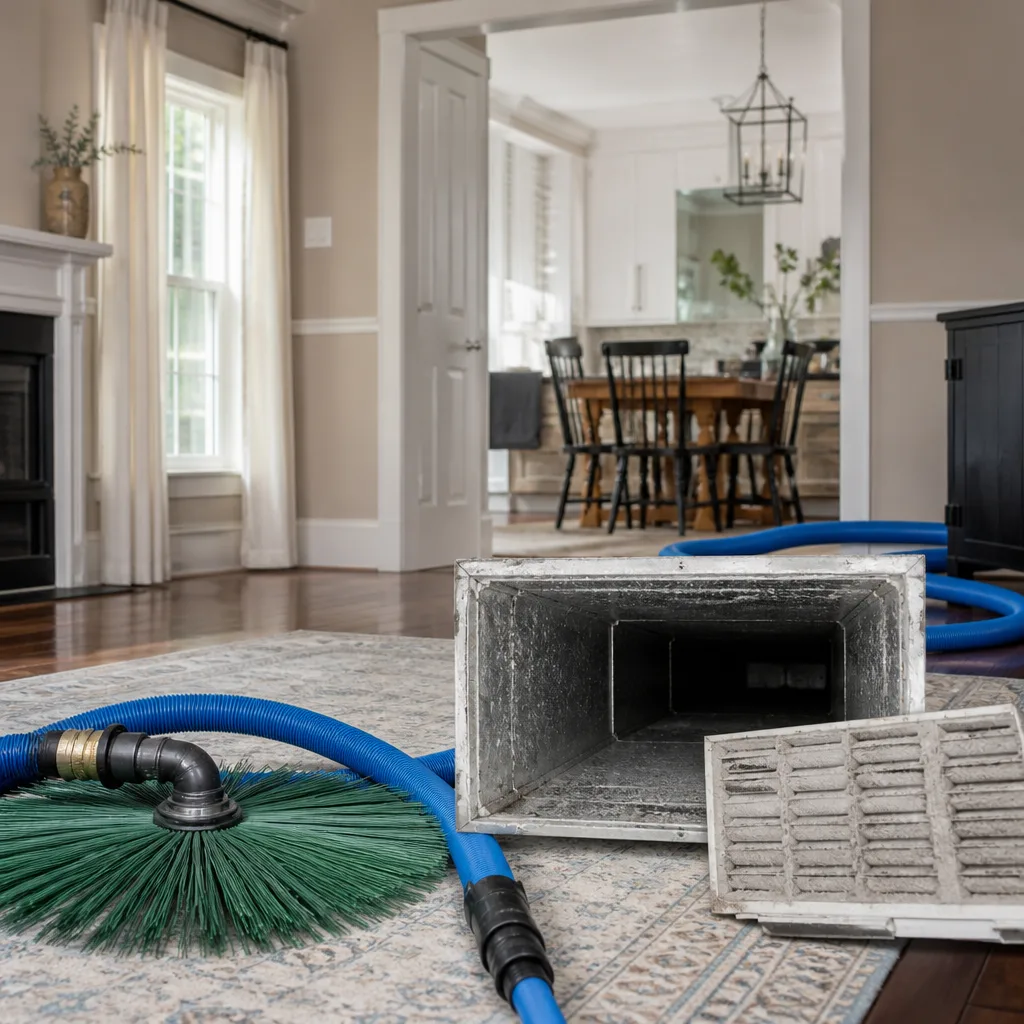 Whole-home duct cleaning
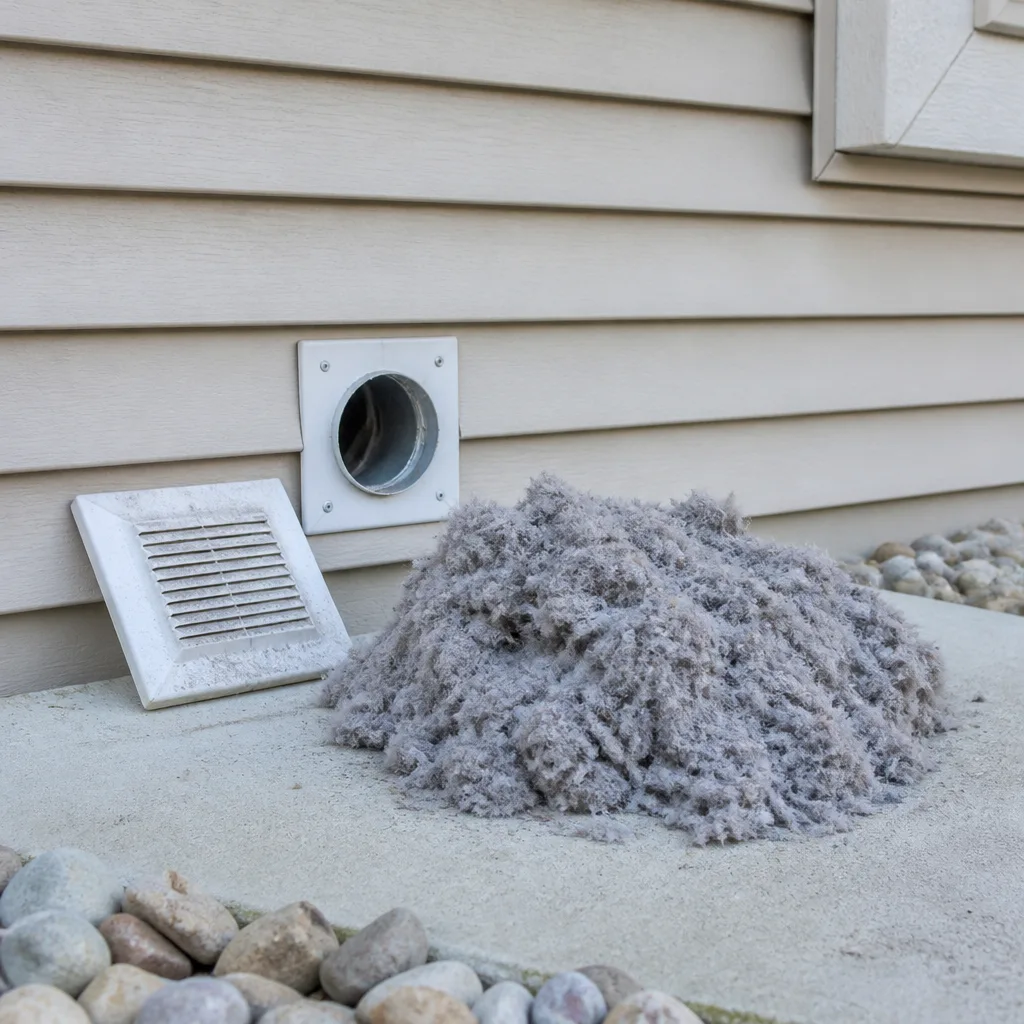 Dryer vent cleaning
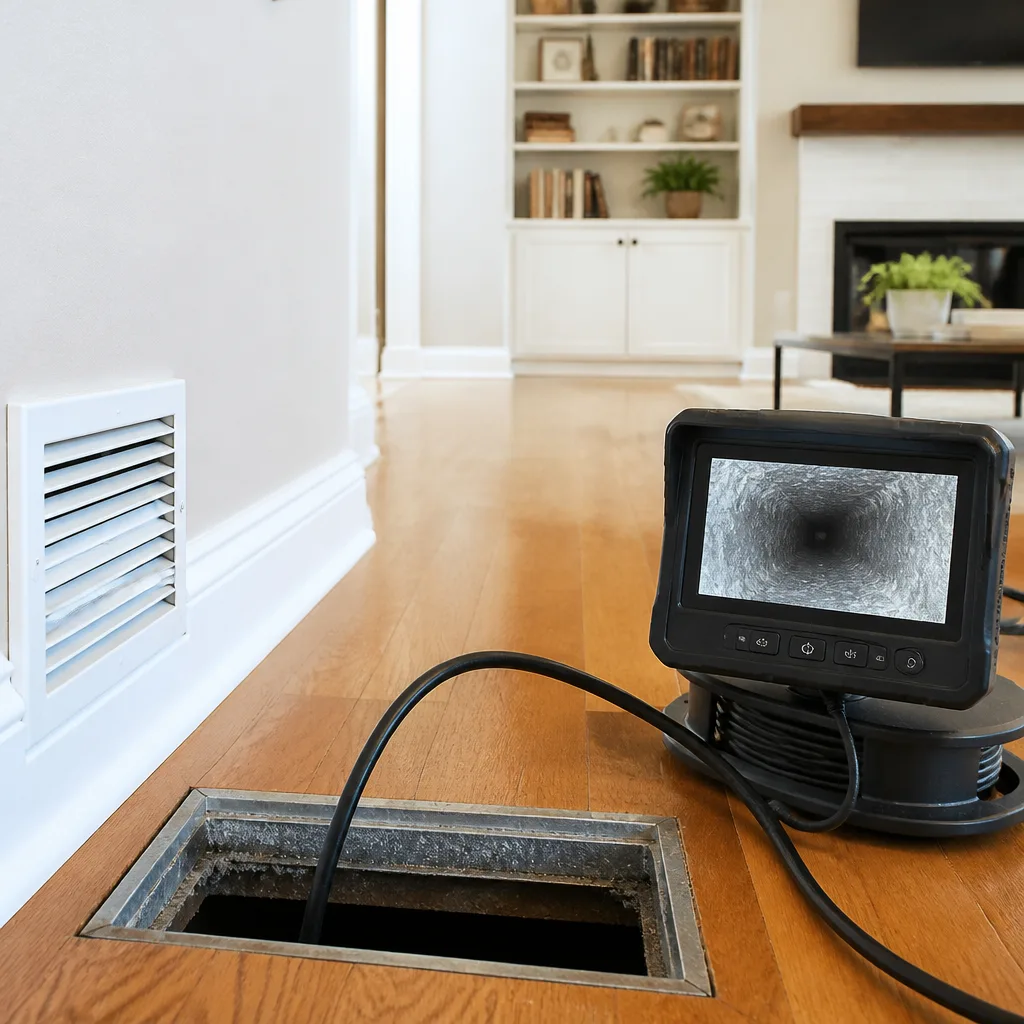 Camera inspection
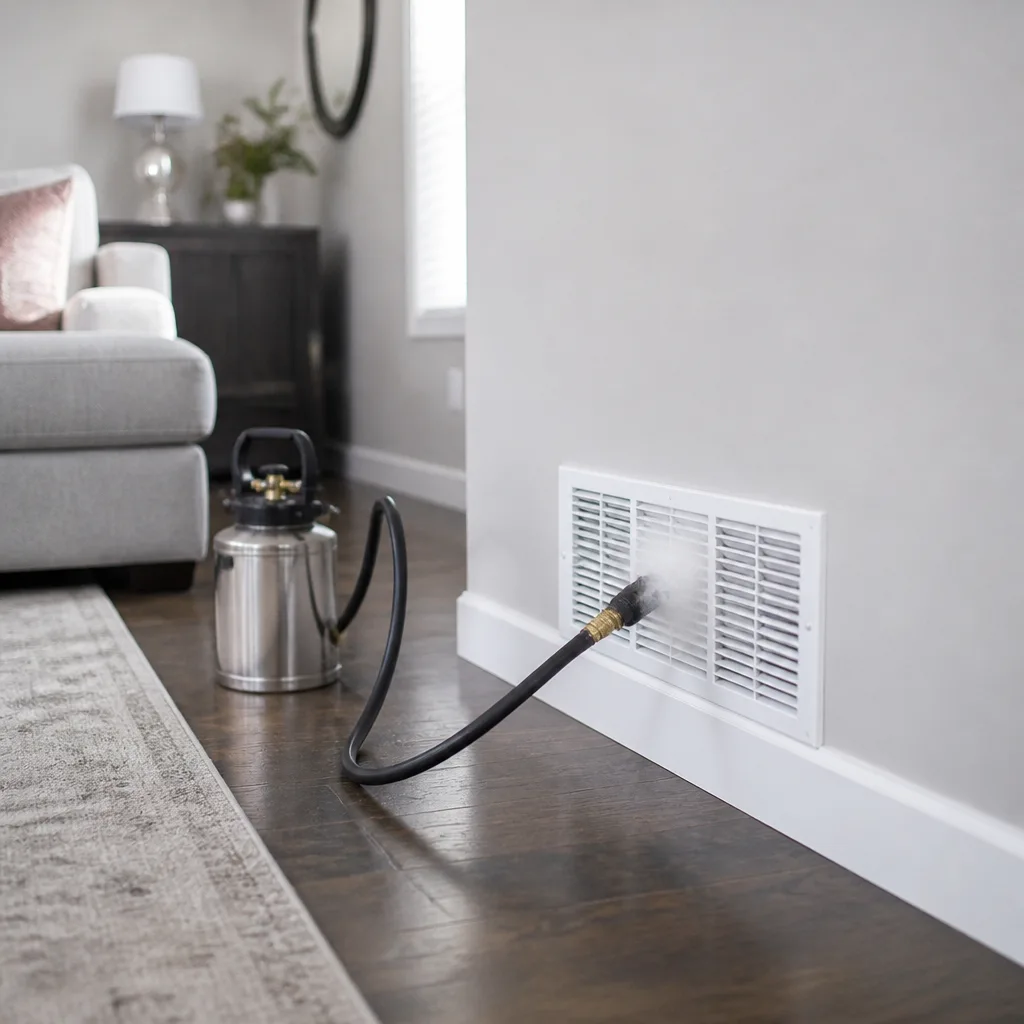 Sanitizing & deodorizing
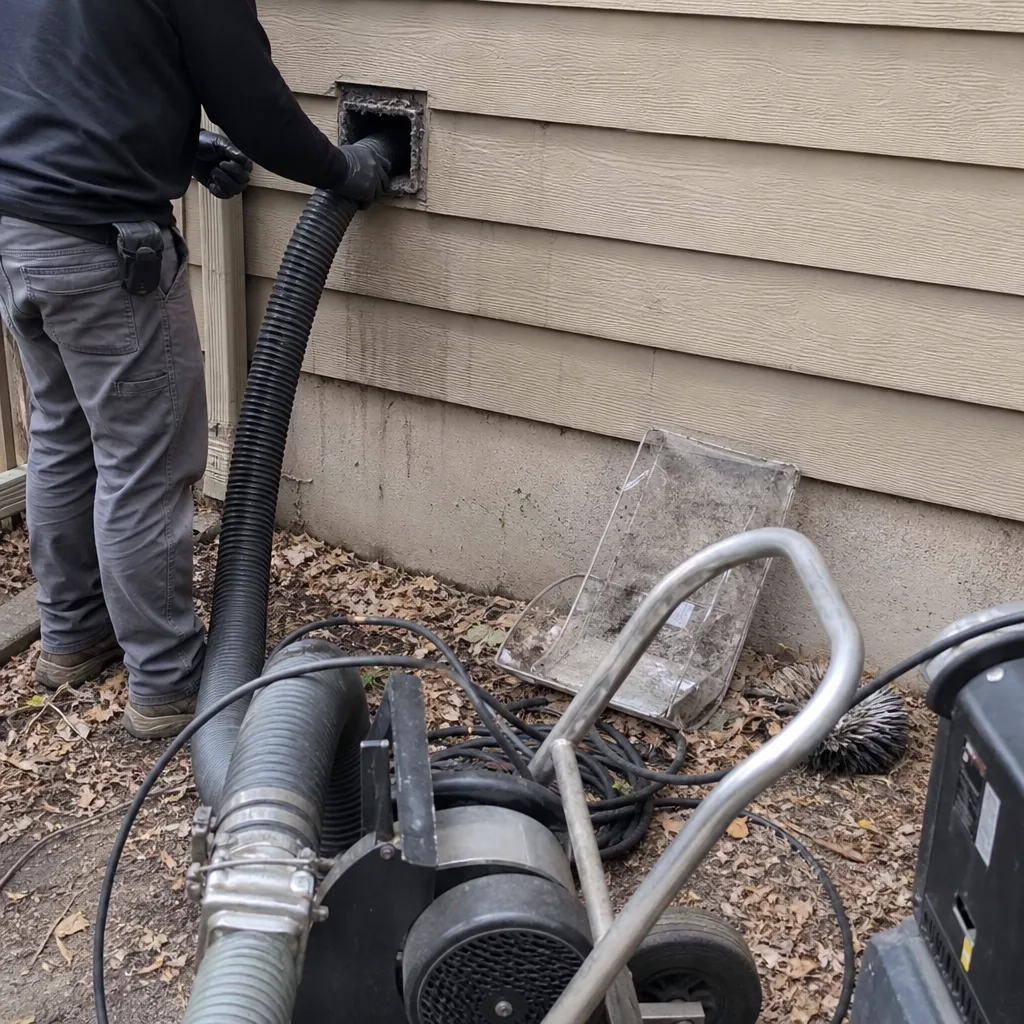
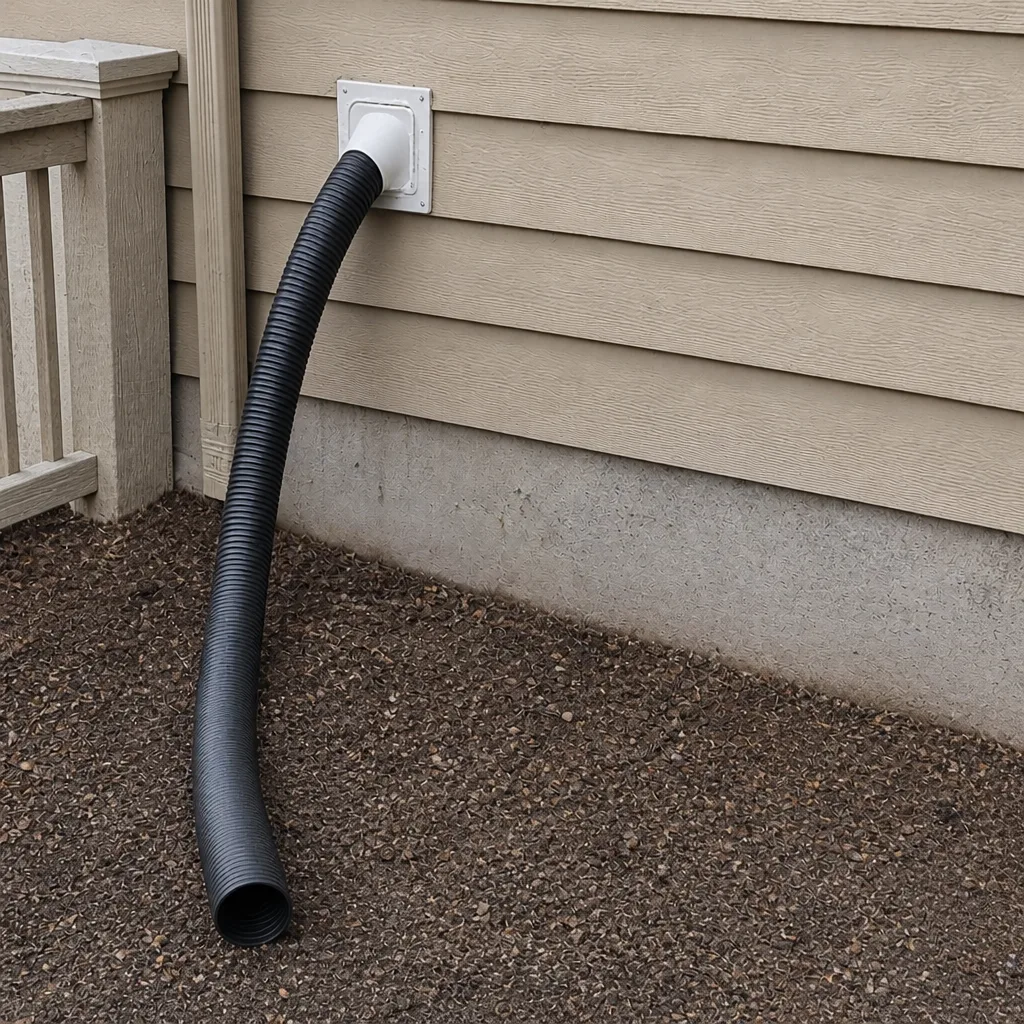
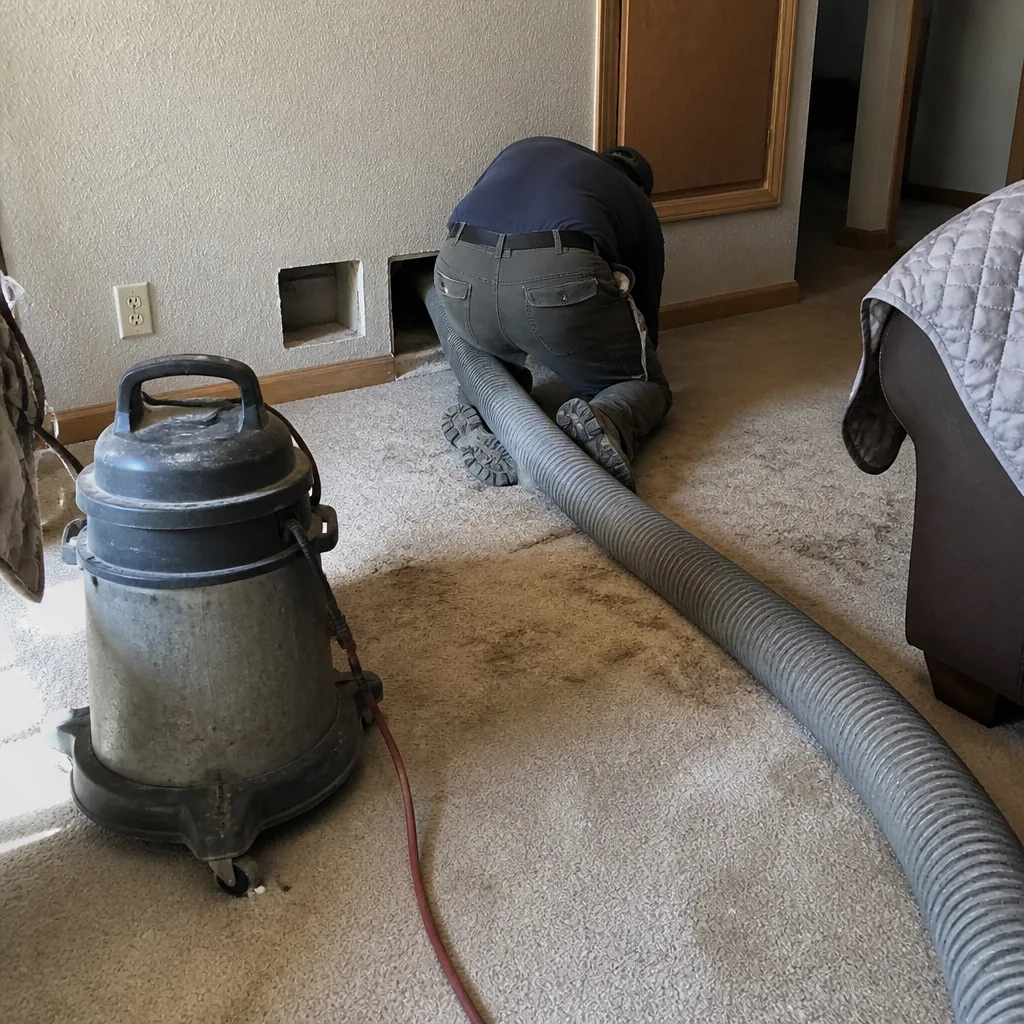
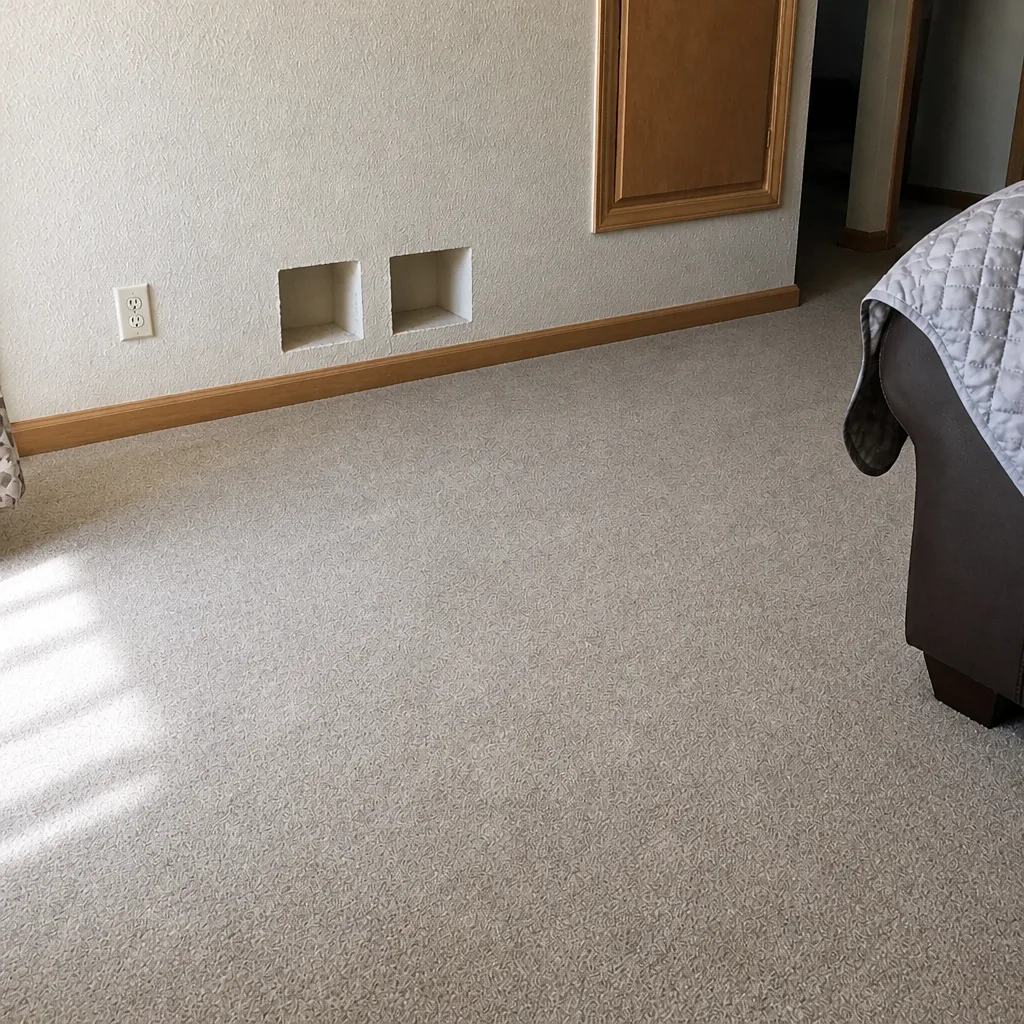
Whole-system duct and dryer vent check with before-and-after photos - you see exactly what came out of your vents
That "$99 whole-house special" is a bait ad - the real number appears once they are in your hallway, or the "clean" is a shop-vac at the register. We photograph the inside of your ducts before and after instead.
Air Duct Cleaning Troubleshooting in Centennial: Common Problems and How to Fix Them
If a technician shows up and starts cleaning before inspecting, that’s the first sign the problem won’t get fixed. The same symptom can mean three completely different things depending on where in the system it starts. Musty air after a cleaning might be mold in the air handler, decomposing debris in a flex run, or a dead pest in a return chase. Weak airflow might have nothing to do with dirt at all. This guide maps each symptom to its actual cause inside the duct system, so you know what you’re dealing with before you call anyone in Centennial. We cover the diagnostics a real troubleshooting visit requires, the mistakes that waste money, and how the elevation and dry air here change what we look for.
Quick Answer
Air duct troubleshooting in Centennial comes down to one principle: match the symptom to its cause before cleaning anything. Odors, weak airflow, and post-cleaning dust each have distinct sources (mold, disconnected or collapsed ductwork, a failed seal, or simple debris), and each requires a different fix. A camera inspection, a pressure test, or a visual register check tells you which one you’re facing. Cleaning without that step treats every problem the same way, which is why some homeowners see no improvement even after a thorough job.
Styles & brands we work with
- Whole-home duct cleaning
- Dryer vent cleaning
- Camera inspection
- Sanitizing & deodorizing
Table of Contents
- Symptom-to-Cause Mapping: What Your Ducts Are Telling You
- Why Airflow Problems Usually Aren’t Duct-Cleanliness Issues
- The “More Dust Than Before” Problem After Cleaning
- How Centennial’s Elevation and Dry Air Affect Static Pressure
- Camera Inspection vs. Pressure Test vs. Visual Register Check
- Mold, Debris, or Pest Infiltration: Telling Them Apart
- When Cleaning Isn’t Enough: Repair and Sealing
- Keeping the System Healthy Between Visits
Symptom-to-Cause Mapping: What Your Ducts Are Telling You
Every duct problem announces itself as a symptom, and the symptom almost never points to one single cause. That’s the core of troubleshooting: separating what you’re smelling or feeling from what’s actually happening inside the system. In our experience across Centennial homes, three symptoms account for most calls, and each one has at least three possible origins.
Here’s how we break down the common ones:
- Musty or earthy odor: could be mold growth in the air handler or evaporator coil, damp debris in a low-lying flex run, or condensation that never dried out. Location and moisture pattern decide which.
- Weak airflow at some registers but not others: could be a collapsed flex duct, a disconnected joint, a closed damper, or a filter bypass pulling unfiltered air. Dirt is rarely the cause when the problem is uneven.
- Dust settling quickly after a cleaning: could be dislodged debris still working through the system, or a failed seal at a joint or register boot letting outside dust back in.
- Rotten or sharp smell: often dead pest infiltration in a return chase or branch run, not a cleaning issue at all.
- Whistling or rattling: usually an airflow or pressure problem, almost never a cleanliness problem.
Notice that “dirty ducts” appears as a cause far less often than the coupon flyers suggest. That’s the point. Before anyone runs a vacuum, the question is which of these you’re facing. The answer determines the tool, the scope, and the price. A Centennial homeowner who calls about musty air and gets a generic cleaning is paying for the wrong job. Air duct cleaning in Centennial done right starts with matching the symptom to the cause, not the other way around.
Why Airflow Problems Usually Aren’t Duct-Cleanliness Issues
Weak airflow is the symptom homeowners most often blame on dirty ducts. Most of the time, that’s wrong. Airflow problems in Centennial homes are usually structural, and cleaning won’t move the needle. A duct system that’s connected, sealed, and sized correctly moves air regardless of a light dust film. A system with a collapsed run or a disconnected joint won’t move air no matter how clean you make it.
The common structural culprits:
- Collapsed flex duct. Flexible duct can kink or crush in a tight attic run or behind a wall cavity. Once it collapses, the run is effectively blocked, and every register downstream of it starves.
- Disconnected joints. Duct sections taped years ago can separate at a joint. Air escapes into the attic or crawlspace instead of reaching the room, and the system loses pressure.
- Filter bypass. If the filter doesn’t seat properly, unfiltered air slips past it and coats the coil and ducts downstream. The filter looks clean while the system gets dirty behind it.
- Undersized or overlong runs. A flex run sized too small for the room it serves delivers weak airflow no matter how clean it is.
- Closed or stuck dampers. A damper left partly closed at the main trunk cuts flow to a whole zone.
Here’s where it pays to look before you clean: a static pressure reading tells you whether the system is struggling to move air, and a camera inspection or a visual walk of the attic runs tells you where. In Centennial, where a lot of homes have long flex runs through unconditioned attic space, collapsed and disconnected flex is the single most common airflow cause we find. Our technicians have up to 11 years of experience, and it’s the first thing we check when a homeowner reports weak flow to one side of the house. If airflow is your symptom, ask for a pressure test and a visual inspection before you authorize a cleaning.
The “More Dust Than Before” Problem After Cleaning
Dust that appears worse for a week or two after a cleaning is normal. Dust that keeps coming back for months means something failed, and it’s usually a seal, not the cleaning itself. So before you call anyone back, decide which one you’re looking at.
When a system gets cleaned, loosened debris in the duct walls, boots, and plenum can travel to the registers over the following days as airflow moves it. This is a short-lived settling effect and it fades. What doesn’t fade is a failed seal. If a joint, register boot, or plenum connection was already leaking before cleaning, or gets disturbed during the work, outside air and attic dust pull into the system and get distributed. The ducts are clean; the envelope isn’t.
How to tell them apart operationally:
- Short-lived dust (days to two weeks): dislodged debris working through. Change the filter once and let it settle.
- Ongoing dust (week after week): a seal failure pulling in unfiltered air. This needs a repair, not another cleaning.
- Dust concentrated near one register: often a boot that isn’t sealed to the drywall, letting wall-cavity air in.
- Dust plus higher energy bills: usually a duct leak in the attic, where conditioned air escapes and untreated air is drawn in to replace it.
This is exactly why we pair cleaning with air duct cleaning and inspection in the same visit, and why Duct Repair & Sealing exists as its own service. A cleaning specialist who can’t find or fix a leaking joint will leave the homeowner with the same dust problem a month later. Before you blame the cleaning, get the seals checked. That’s the difference between a temporary symptom and a fixed system.
How Centennial’s Elevation and Dry Air Affect Static Pressure
Centennial sits at roughly 5,500 feet, and that altitude changes how a duct system behaves. At higher elevation, air is thinner, and the blower has to work against a different pressure environment than at sea level. This matters for troubleshooting because a system that performs fine at lower elevation can feel underpowered here, even with clean, connected ducts. The dry climate compounds it: low indoor humidity changes how dust and debris behave inside the system, and static electricity can make fine particulate cling to duct walls instead of settling.
What this means practically when we diagnose a Centennial system:
- Static pressure readings need local context. A reading that looks borderline on a sea-level chart can be entirely normal here. Diagnosing suction loss without accounting for elevation leads to chasing a problem that isn’t there.
- Dry air means dust behaves differently. Fine debris stays airborne longer and clings to duct surfaces, so a light visual inspection can miss more than it does in humid climates.
- Filter loading runs faster in dusty, dry seasons. A filter that would last months elsewhere can load up quicker here, and a clogged filter mimics a duct problem by starving airflow. Check the filter first.
- Elevation and filter condition interact. A restricted filter on a high-altitude system can push static pressure into a range that makes the blower strain and the airflow drop. It’s the most common “duct problem” that turns out to be a filter problem.
When a homeowner in The Pinery tells us air flow feels weaker than it used to, the first two things we rule out are filter condition and altitude-corrected static pressure. Only after those do we start looking at the ducts themselves. Getting this order right in Centennial saves a lot of unnecessary cleaning.
Camera Inspection vs. Pressure Test vs. Visual Register Check
Different symptoms call for different diagnostics, and requesting the wrong one first wastes money. Here’s how to decide which to ask for, and in what order.
Ask for a visual register check first if the problem is something you can see at the vents: visible dust blowback, a loose grille, a weak puff of air, or debris sitting in the boot. It’s the fastest, cheapest look and it rules out the obvious.
Ask for a pressure test if the symptom is airflow: weak flow to one room, a system that never seems to deliver enough air, or higher energy bills without a visible cause. Static pressure tells you whether the system is fighting to move air and whether the problem is upstream or downstream.
Ask for a camera inspection if the symptom is odor, suspected mold, suspected pest activity, or a hidden problem in a flex run or chase you can’t see into. The camera goes where the eye can’t and provides the evidence to decide between mold, debris, and pest infiltration. With Abatement Technologies equipment in our toolkit, we can read what the camera finds against contamination and remediation standards rather than guessing.
The order that usually makes sense in a Centennial home:
- Check the filter and confirm it’s seated and not bypassing.
- Do a visual register check at the affected vents.
- Run a pressure test if airflow is the complaint.
- Follow with a camera inspection if odor, mold, or pests are suspected or if the pressure test points to a hidden restriction.
- Only then decide whether cleaning, repair, or sanitizing is the right intervention.
If a company wants to clean first and diagnose later, that order is backwards. The diagnosis tells you what to clean and whether cleaning is even the fix.
Mold, Debris, or Pest Infiltration: Telling Them Apart
Three very different problems produce the same musty or unpleasant smell, and only a camera inspection tells them apart reliably. Treating all three the same way (a generic cleaning plus a spray) leaves the actual cause in place.
Mold. Real mold growth needs moisture, so its presence points to a damp source: a coil that stays wet, condensation that isn’t draining, or a run in a humid space. Cleaning removes the visible growth, but unless the moisture source is fixed, it returns. Sanitizing with Guardsman-grade products addresses the surface, and the moisture fix addresses the cause. This is a remediation situation, not a cleaning one, and it’s why we treat contamination-level work differently from routine service.
Debris. Damp, decomposing debris, dust that collected and stayed damp, or construction dust from a remodel can smell musty without any mold at all. The camera shows the debris but no growth pattern. Cleaning removes it and the smell goes with it.
Pest infiltration. Droppings, nesting material, or carcasses in a return chase or branch run produce a sharp, rotten odor. The camera finds it; cleaning and sanitizing remove it; and the entry point needs to be found and sealed so it doesn’t happen again.
Why camera evidence matters here: without it, a company can only guess between these three, and guessing leads to either overcharging for remediation that isn’t needed or under-treating a mold problem as if it were plain dust. In Centennial, we’ve seen all three in the same neighborhood because the causes are structural (moisture, access points, run design), not geographic. The camera turns a smell into an answer.
When Cleaning Isn’t Enough: Repair and Sealing
Some duct problems are structural, and no amount of cleaning fixes a leak, a collapse, or a disconnected joint. If your symptoms are airflow loss, ongoing dust, or a system that keeps drifting back to the same problem, cleaning is the wrong first move. Repair and sealing is the fix.
What repair and sealing addresses:
- Leaking joints and seams. Sealing stops conditioned air from escaping and stops attic or crawlspace air from being pulled in.
- Disconnected runs. Reconnecting a separated flex section restores airflow to the rooms downstream.
- Collapsed flex. Replacing a crushed run restores flow and pressure.
- Unsealed register boots. Sealing the boot to the drywall stops wall-cavity air from mixing into the supply.
This is the service most cleaning-only companies don’t offer, and it’s the one that resolves the symptoms cleaning can’t touch. Pairing it with cleaning makes sense in a single visit: clean what’s accessible, seal what’s leaking, and then confirm airflow with a static pressure check before calling the job done. In Centennial, where attic runs and long flex sections are common, sealing is often the difference between a system that works and one that keeps under-delivering. When a diagnostic points to structural loss, we fix the cause rather than clean around it.
Keeping the System Healthy Between Visits
Troubleshooting is easier when the baseline is clean and the seals are sound, and a few habits keep it that way. Most of the “problems” that bring homeowners to us start as small, unaddressed maintenance gaps.
- Check the filter on a schedule that matches your dust load. In Centennial’s dry, dusty seasons, that may mean more often than the calendar on the package suggests. A loaded filter is the most common cause of airflow complaints.
- Make sure the filter is seated. A filter that doesn’t fit its frame lets unfiltered air past it. That bypass is a silent cause of dirty coils and ducts.
- Watch for recurring dust in the same spot. If one register keeps kicking up dust after cleaning, that’s a seal issue, not a cleaning issue, and it’s worth a repair visit.
- Don’t ignore moisture. Any damp smell near the air handler or a run in a humid space is worth checking before it becomes mold.
- Get the dryer vent and HVAC unit served on the same rhythm as the ducts. A clean air pathway is only as good as its weakest component.
The full air pathway covers ducts, the dryer vent, the HVAC unit, sealing, and sanitizing. We treat all five because a problem in one often shows up as a symptom in another. Keeping up with dryer vent cleaning and HVAC cleaning alongside duct service keeps the whole system diagnosable and working.
Common Mistakes to Avoid
- Authorizing cleaning before any inspection. If the technician starts cleaning before checking the filter, the registers, or the pressure, they’ve skipped the step that tells them what to fix. Ask what they found first.
- Assuming dirty ducts cause every airflow problem. In Centennial’s dry, high-altitude conditions, a collapsed flex run or a clogged filter is far more likely. Cleaning a structurally compromised system solves nothing.
- Treating a musty odor as a cleaning job. Odor needs a camera inspection to separate mold from debris from pests. Cleaning without that diagnosis leaves the cause in place.
- Skipping the filter-seat check. A filter that looks clean but doesn’t seat properly lets dust bypass it. This is one of the most common hidden causes of a dirty coil here.
- Cleaning but not sealing. Leaking joints and unsealed boots will keep pulling in dust and losing airflow. Sealing is half the job most companies skip.
- Calling back the same cleaner for a problem they can’t fix. If the symptom returns after a cleaning, the issue is structural and needs repair, not another round of cleaning.
- Ignoring the dryer vent and HVAC unit. A clean duct system still underperforms if the dryer vent is clogged or the HVAC unit is fouled. Check the whole pathway, not just the ducts.
See the difference
 Before
 After
 Before
 After
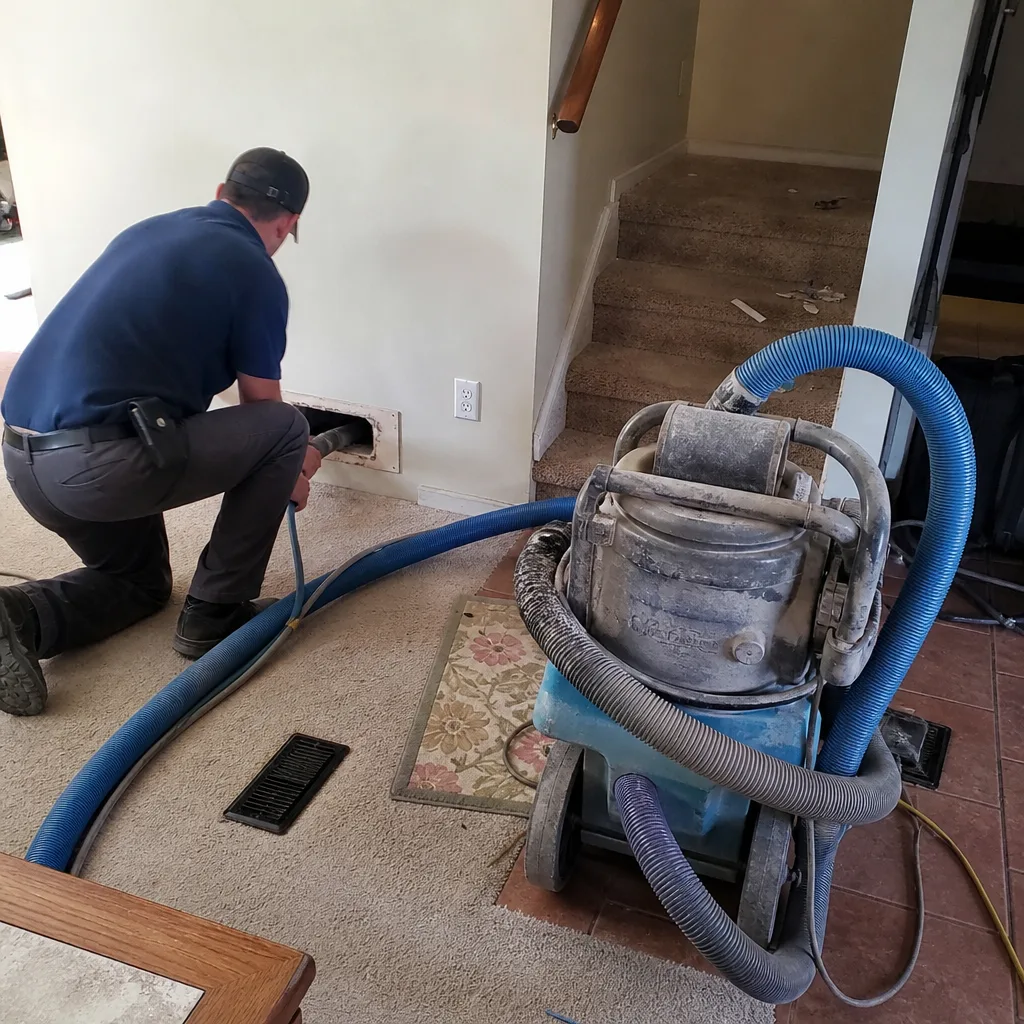 Before
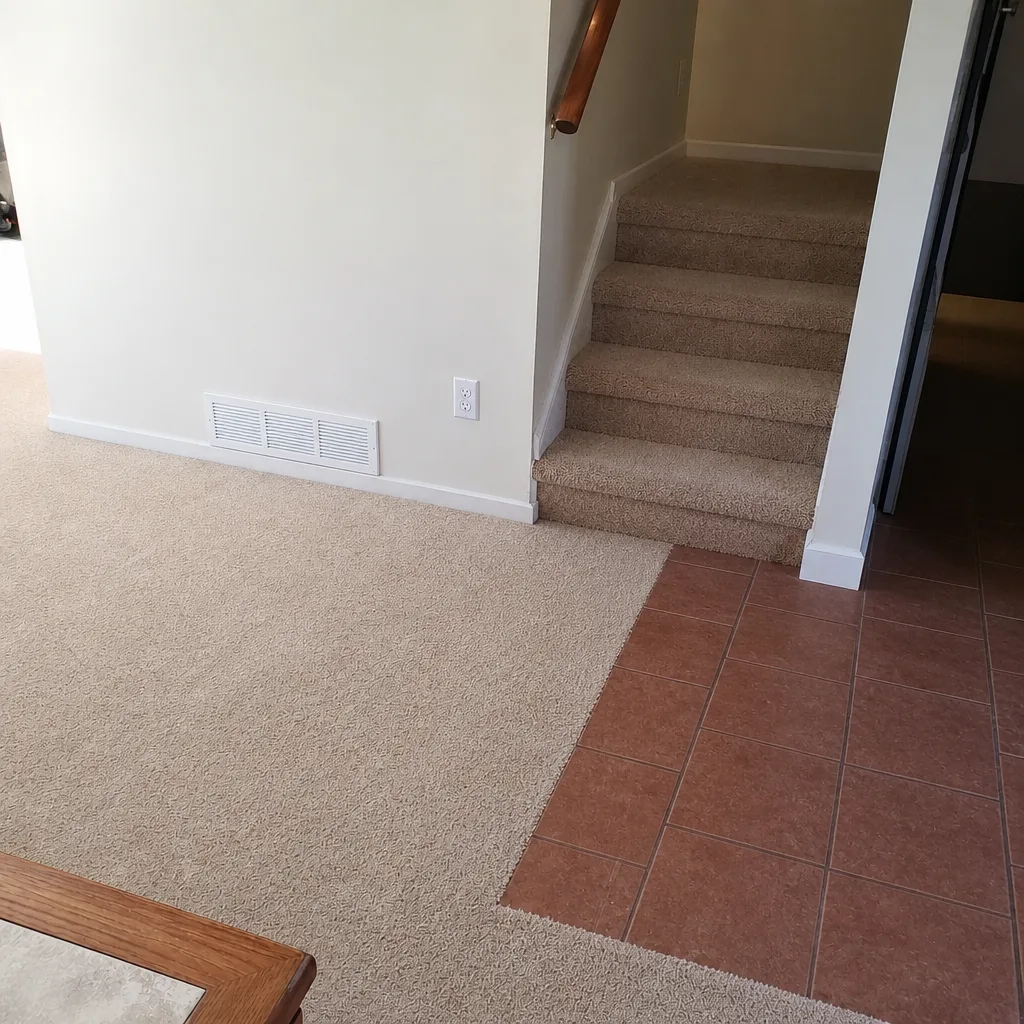 After
When to Call a Professional
Call a professional when a symptom keeps returning after a cleaning, when airflow drops to one side of the house and doesn’t recover after a filter change, when you smell something musty or rotten near a vent, or when you see dust blowing back out of a register. Those are the signs that the problem is structural or contamination-level, and both need the right diagnostic before any cleaning. What you should not do is start pulling flex duct apart yourself to find a suspected leak; that’s where a small airflow problem becomes a bigger repair. A trained technician has the camera and pressure tools to trace the cause without disturbing the system, and the repair ability to fix a leak or a collapsed run once it’s found.
Air Duct Cleaning Centennial offers free estimates in Centennial, and the written estimate sets the price per system before any work starts. Call (855) 337-2063 to book a diagnostic and get a straight answer about what’s actually wrong.
Frequently Asked Questions
Because a cleaning can disturb debris that was sitting in the system, or because the real cause was never mold-to-beginning with and the odor is from damp debris, a moisture source, or pest infiltration that cleaning didn’t address. If the smell fades within a week, it was likely dislodged debris. If it lingers, the cause needs a camera inspection. Call (855) 337-2063 for an exact quote on a diagnostic estimate.
Short-lived dust for several days to two weeks after a cleaning is normal settling of loosened debris. Dust that keeps coming back for weeks usually means a failed seal at a joint or boot is pulling unfiltered air into the system. In that case the ducts are clean and the envelope needs repair. Call (855) 337-2063 to book a seal check.
No. In our experience, weak airflow in Centennial homes is usually structural: a collapsed flex duct, a disconnected joint, a filter bypass, or a clogged filter. At 5,500 feet, static pressure behaves differently than at sea level, so a pressure test gives a clearer picture than a cleaning alone. Call (855) 337-2063 for an exact quote on a pressure test and estimate.
You can’t tell from the smell alone, and both can smell musty. Only a camera inspection shows which you’re facing: mold has a growth pattern tied to a moisture source, while debris looks like damp buildup with no growth. The diagnosis changes the scope of the work. Call (855) 337-2063 for a camera estimate.
Cheap quotes are usually for a surface pass that skips the inspection, the seal check, and the repair work that actually fixes a problem. The low price covers a per-vent vacuum and little else, and the real fix costs more. We give one flat price per system, agreed before work starts, with before-and-after photos of your own ducts. Call (855) 337-2063 for an exact quote.
There’s no single schedule that fits every home, and anyone who quotes one fixed number is guessing. Factor in dust load, pets, recent remodeling, and whether you’ve had moisture or pest issues. In dry, dusty Centennial conditions, filters load faster, and that affects how often the system needs attention. Call (855) 337-2063 to talk through your situation and get a free estimate.
The Bottom Line
Most duct problems in Centennial aren’t cleanliness problems; they’re diagnosis problems. Weak airflow, musty odors, and post-cleaning dust each trace back to a specific cause inside the system (collapsed flex, a failed seal, mold versus debris, or pest infiltration), and each needs its own diagnostic and its own fix. Match the symptom to the cause before anyone cleans. Ask for a visual register check, a pressure test, or a camera inspection based on your symptom, and don’t accept a cleaning without an inspection. Our technicians have up to 11 years of experience, we use professional-grade Rotobrush and Nikro equipment, and we repair and seal what we find. Call (855) 337-2063. We answer 24/7. Fast dispatch from 7am to 7pm, Sunday through Friday, and the written estimate sets the price per system before work starts.
Written by the team at Air Duct Cleaning Centennial.