
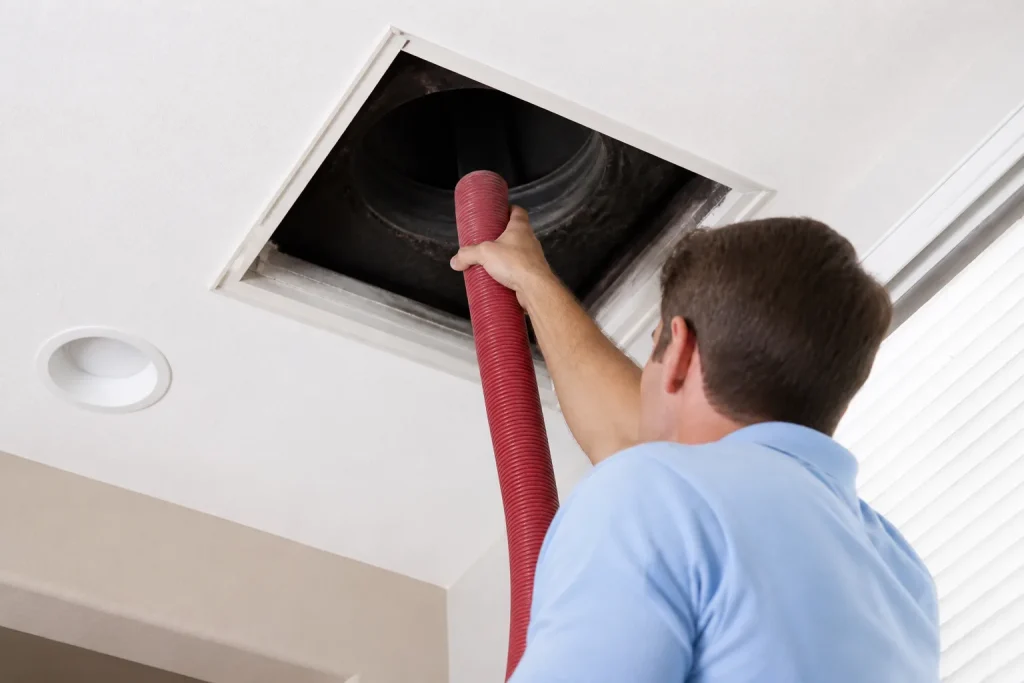
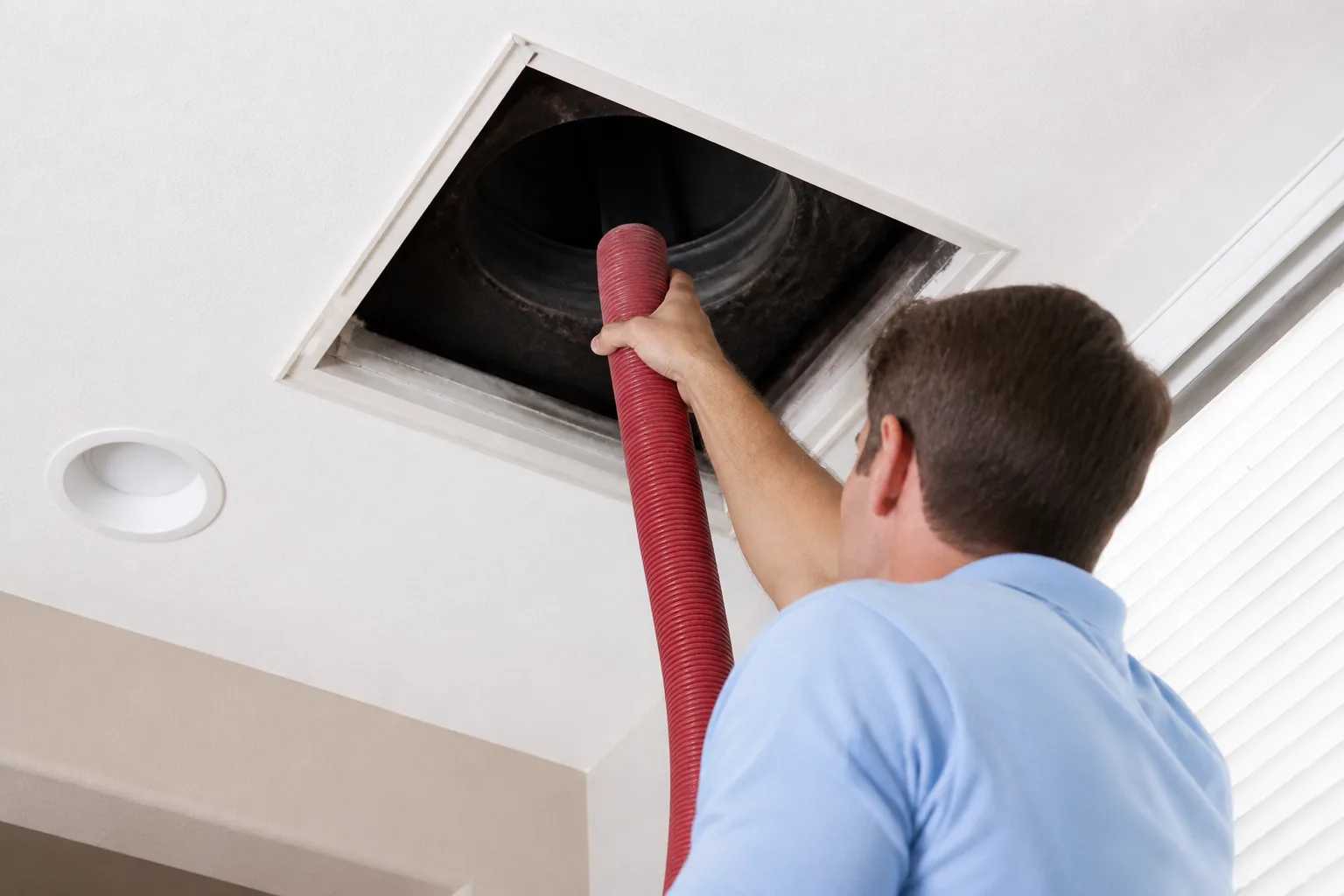
Top Signs You Need Air Duct Cleaning Service – Don’t Ignore These
Most “signs you need duct cleaning” articles lead with the same three items: dusty registers, visible dust on furniture, and allergy symptoms. In our experience, dust on registers is one of the least diagnostic indicators there is. Register dust is usually a filter bypass problem or a static charge issue, and cleaning your ducts won’t fix either one. You’d spend money and see the same dust return within a month. If you’d rather have a specialist inspect rather than guess, call (855) 337-2063 for a free estimate.
That’s the whole problem with symptom-based checklists. They mix signals that actually point to duct contamination with signals that point somewhere else entirely, and a homeowner ends up either skipping cleaning they genuinely need or paying for cleaning that won’t solve the real issue. Here’s how to tell the difference.
Key Takeaways
- Post-renovation debris, confirmed rodent evidence, and visible mold inside supply plenums are the three signs that most reliably indicate duct contamination.
- Rising allergy symptoms alone are weak evidence. You need an inspection finding that confirms the connection.
- Some “duct cleaning” signals are actually filter, sealing, or HVAC service signals.
- Wildfire smoke seasons, dry air that keeps particulates suspended, and older flex duct in mid-2000s construction all make Centennial homes more prone to duct contamination.
- A two-minute flashlight-and-phone self-check of accessible registers tells you more than any checklist.
The Three Signs That Actually Indicate Duct Contamination
If you want a short list you can trust, this is it. In our experience working on systems across Centennial, these three conditions point to duct contamination reliably enough to justify professional cleaning.
1. Debris left behind after renovation or construction
Drywall dust, sawdust, insulation fibers, and fine grit settle into return and supply runs during any significant renovation. Filter changes don’t pull that material back out once it’s settled into the duct walls and joints. If your home or the unit had walls opened up, flooring replaced, or insulation work done, that debris is a genuine cleaning signal. It’s also one of the most overlooked, since it hides inside the system where no one looks.
2. Confirmed rodent evidence in or around the duct system
Chewing, droppings, nesting material, or a distinctive smell near a register can indicate mice or other rodents have moved through the system. This is a contamination scenario, not a maintenance one. Cleaning, followed by sanitizing, is the right response, and it needs to be done thoroughly. We use Abatement Technologies equipment for situations like this because the contamination level is beyond what a consumer machine handles.
3. Visible mold inside a supply plenum
Mold on the inside of a supply plenum or nearby duct surfaces is a confirmed contamination finding. It’s not something to treat with a spray bottle and hope. Professional cleaning, and then a Guardsman-grade sanitizing treatment, is the appropriate response. If a company wants to clean your ducts without addressing the moisture source first, that’s a red flag.
All three of these have something in common: they’re confirmed by observation, not by symptom.
Why Allergy Symptoms Alone Are Weak Evidence
Increased allergy symptoms do not, by themselves, prove your ducts are contaminated. That’s the part of the conventional list where the logic breaks down. Allergens come from many directions. Pollen comes in through open windows and through the air handler. Pet dander lives in upholstery and carpet. Dust mites need humidity. A rundown filter lets everything through.
What actually confirms a duct connection isn’t a symptom. It’s an inspection finding. When we open the system and find visible buildup on duct surfaces, debris packed into joints, rodent evidence, or biological growth, that’s the confirmed link. Without a visual finding, cleaning is a guess.
In our experience, homeowners who call because of allergy symptoms are about evenly split: half have genuine duct contamination that cleaning will help, and half need a filter upgrade, better humidity control, or a source of allergens removed from the home. We’d rather find out which one you are before you spend anything.
So if allergies are your main concern, the honest advice is to get an inspection rather than clean on symptoms alone.
How to Self-Assess Your Registers with a Flashlight and a Phone Camera
You can do a useful first-pass check before you call anyone. It takes a couple of minutes and no special tools. Here’s how.
- Remove an accessible register cover. Start with one near the air handler and one at the far end of the house.
- Shine a flashlight up the duct mouth. Look for visible buildup on the metal or flex surfaces, not loose dust near the grille.
- Take a photo with your phone camera, flash on. The camera sees into the corners better than your eye does at that angle. Review the photo on a larger screen if you can.
- Look for specific things: dark patches or fuzzy growth (possible mold), droppings or a musky smell (rodent evidence), grit or fine powdery residue (renovation debris), or torn or disconnected flex liner.
- Check the air filter slot. Dust bypassing at the edges of a poorly fitted filter is very common, and it looks like “dirty ducts” but isn’t.
If the photo shows clean duct walls and the filter fits snugly, the dust on your registers is almost certainly not a duct cleaning problem. If the photo shows buildup, growth, debris, or a torn liner, that’s worth a professional look.
Cleaning Signals vs. Sealing, Filtering, and HVAC Signals
This is where a lot of Centennial homeowners get led in the wrong direction. Some of the most-cited “signs you need duct cleaning” actually point to a different service entirely. Getting the right service matters, because cleaning won’t fix a sealing problem and sealing won’t fix a filter problem.
- Dusty registers with a clean system → filter bypass or fit issue, not a cleaning signal.
- Higher energy bills and rooms that won’t stay warm or cool → duct leakage or disconnection. This is where duct repair and sealing earns its keep.
- Airflow that’s weak at every register → HVAC unit performance, blower, or major obstruction. That’s an HVAC service question.
- Visible buildup, debris, droppings, or growth inside the system → this is the real cleaning signal.
- A system never sealed or balanced after a renovation → sealing is likely the answer, and it’s what we do alongside cleaning when the problem is structural.
We offer duct repair and sealing alongside cleaning because cleaning a leaking system just moves air around. If the ducts are leaking, cleaning them doesn’t fix the air loss. If a liner has torn, it needs repair, not a pass with a vacuum. We don’t just clean. We diagnose, repair, and protect. That approach is the difference between a service that solves a problem and one that masks it for a season.
If your system points toward a sealing or repair issue, air duct cleaning is often the starting point, but the plan should include the structural fix too.
Why Centennial Homes Are More Prone to Duct Contamination
Local factors push some Centennial homes toward cleaning sooner than a generic checklist would suggest. Three stand out.
Wildfire smoke seasons. When smoke moves into the Front Range, fine particulate gets pulled through the return side and settles in run surfaces. A filter catches some of it. It doesn’t catch all of it, and whatever slips past accumulates over multiple seasons.
Dry conditions that suspend particulates. The dry air across Centennial keeps fine dust and ash airborne longer rather than settling out. That means more of it circulates through the system and ends up deposited inside duct runs.
Older flex duct installations in mid-2000s construction. Many homes built in that era were fitted with flex duct that has since lost some of its internal liner integrity. Torn or sagging liner traps debris and is a contamination magnet. It’s also why we inspect before quoting: flex that’s failing needs repair or replacement, not just cleaning.
Add these to frequent renovations and you have a solid case for inspecting the full air pathway of a Centennial home. That pathway includes the HVAC unit itself, which is why we also handle HVAC cleaning and why we carry Honeywell and Aprilaire equipment: cleaning and whole-home filtration work better together than either does alone. If you’ve wondered how to know whether your system needs cleaning without a full inspection, these are the Centennial-specific reasons to check.
When to Call a Pro
Call a professional when your self-assessment turns up any of the three confirmed signals, when you suspect rodent activity, or when you see growth inside a plenum. Those aren’t DIY cleaning situations. A consumer vacuum doesn’t have the airflow or containment to do the job, and it can spread contamination rather than collect it. This is exactly why we run Rotobrush and Nikro: contractor-grade systems with containment, not consumer machines. We use the same equipment trusted by commercial contractors.
If you’re in Centennial and want a trained eye on the system, we offer free estimates and give you a process-driven answer, not a sales pitch.
The Bottom Line
The reliable signs of duct contamination are confirmed, not hypothetical: post-renovation debris, rodent evidence, and visible growth inside a plenum. Symptoms like allergies and dusty registers are weaker signals, and some point to sealing, filtering, or HVAC service instead. That’s how we diagnose in Centennial. We identify whether the problem is contamination, a leaking system, or a filter failure, then recommend the right service. Duct cleaning is one part of a complete air pathway, not a catch-all.
If you’re in Centennial and need help, Air Duct Cleaning Centennial offers free estimates. Call (855) 337-2063. We answer 24/7. Fast dispatch from 7am to 7pm, Sunday through Friday.
Related services in Centennial: For keeping the rest of that pathway maintained, you can also schedule dryer vent cleaning or go back to the Air Duct Cleaning Centennial homepage for the full service menu.
Frequently Asked Questions
You need air duct cleaning when you can see a confirmed problem: post-renovation debris inside the ducts, rodent evidence, or visible mold in a supply plenum. Dusty registers alone don’t prove contamination. A flashlight and phone camera check of a few accessible registers will tell you a lot. Call (855) 337-2063 if you find one of the confirmed signs.
No, allergy symptoms alone don’t confirm duct contamination. Allergens come from pollen, pet dander, dust mites, and filters too. What confirms the connection is an inspection finding, like visible buildup or growth inside the system. An inspection tells you whether cleaning will help; call (855) 337-2063 to schedule one.
Usually not. High energy bills and rooms that won’t stay comfortable point to duct leakage or disconnection, which is a sealing and repair problem, not a cleaning one. Cleaning a leaking system won’t stop the air loss. If that’s your issue, call (855) 337-2063 for a free estimate.
It depends on conditions, not a fixed schedule. Homes with recent renovations, rodent history, pet dander, or exposed wildfire smoke seasons tend to need it sooner. Homes with sealed, well-filtered systems can go longer. An inspection; not a calendar; is the better guide. Call (855) 337-2063 for an assessment.
Written by the team at Air Duct Cleaning Centennial.
Need Air Duct Cleaning Help?
Call Air Duct Cleaning Centennial - the local pro we connect you with is licensed and insured, here with fast help in Centennial.
(855) 337-2063